
Beth Ann Rosica’s writings are a blend of news, opinion, and analysis.
While Democrats made significant electoral gains in the midterm elections, the results may not indicate the “Blue Tsunami” that pundits are reporting — at least when it comes to policy.
Yes, the Dems took both chambers of Congress, gained a majority of governorships, moved into control of more than half the state legislative chambers, and secured new governing trifectas in five states — including Pennsylvania.
However, there is another indicator suggesting that the average voter does not necessarily support progressive or socialist policies.
In four states, commonsense was on the ballot — and won.
Arizona, Colorado, Nebraska, and Washington all had initiatives on the ballot for voters to decide whether boys should be allowed to play in girls’ sports. While the specifics varied across the states, the intent was clear: only biological females should participate in girls’ and women’s sports.
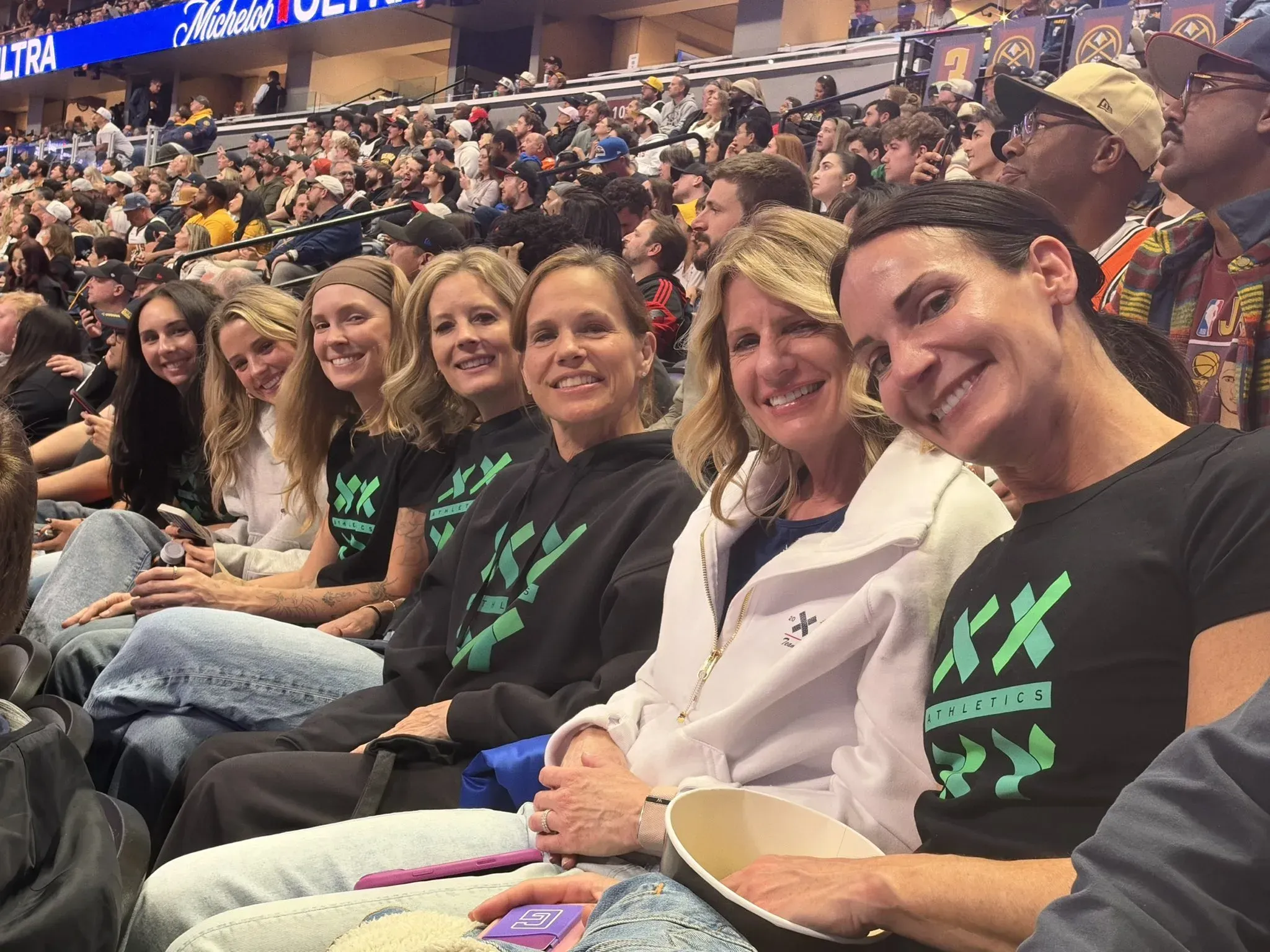
In deep blue Colorado, Jennifer Sey, founder of XX-XY Athletics — the only brand dedicated to protecting women’s sports and spaces — played a significant role in the campaign, helping to secure passage of the ballot initiative.
The Protect Women and Girls Sports Act passed with close to 53 percent of the vote in a state where Democrats won the governorship and captured supermajorities in both chambers of the state legislature.
Prior to the election, Sey was optimistic about the bill passing. She and her XX-XY team attended the Denver Nuggets game the night before the election, and she “knew it would pass based on the game.”
Sey said that no one was harassed or booed for wearing XX-XY gear — quite the opposite was true. Fans cheered them or gave them a thumbs up. This was quite different from WNBA games, where Sey and others sporting the gear have been harassed, intimidated, and thrown out of games just for wearing a particular t-shirt.
According to Sey, “normies generally attend” NBA games, while political activists show up at WNBA games. The positive reception at the Nuggets game gave the XX-XY team confidence that the ballot proposition would pass, and they were right.
“Passing the proposition is promising because it shows that people can come together across the aisle on important issues,” said Sey in an interview.
Sey is hopeful that more people will speak out as a result of the rejection of progressive policies.
“This was never a partisan issue,” said Sey. “It’s a commonsense issue. Basic truth and biological reality don’t have a party. This was always about right versus wrong, not right versus left. My fondest hope is that now, this gives other Democratic states the courage to do the same and pass legislation to protect girls sports.”
The win highlights an interesting political divide: voters supported the sports restriction, but elected officials largely opposed it.
That disconnect is already evident as Gov.-elect Phil Weiser signaled that he would support legislative efforts to change it, calling for “adjustments” to the voter approved measure. (Colorado law does not grant the governor veto power, but the legislature has the ability to amend ballot propositions once passed.)
Sey doesn’t think this will be a “good look” for the new governor and hopes that he will honor the will — and the votes — of the people.

In other states, the ballot measures passed by even greater margins, including in very blue Washington.
Washington’s initiative, Sex Verification Requirements for Female School Sports Initiative, passed with 56.6 percent of voters. This is particularly notable given that Washington has not only a Democratic trifecta, but also a Democratic triplex — meaning Democrats also hold the offices of governor, attorney general, and secretary of state.
Similar to Colorado, voters selected Democratic candidates but rejected their policies related to boys in girls’ sports.
While not all the results are final in Arizona, Democrats are poised to gain a trifecta.
Yet, despite the strong showing for Democratic candidates, the Protect Girls’ Sports in Arizona Act passed with 59 percent of the vote. The measure includes protections not only for sports, but also for private spaces. Once again, voters rejected radical policies.
The Nebraska initiative, Equal Access to Athletic Opportunities for Females Amendment, passed by the greatest margin, with 68 percent of voters supporting female athletes. This measure actually amends the Nebraska Constitution. Given the conservative nature of the state, it is not surprising that the initiative passed by the largest majority.
The results reveal an important distinction between candidate preferences and policy preferences. Voters in four states — including traditionally Democratic Colorado and Washington — supported measures establishing sex-based eligibility rules in school athletics, even as they elected Democratic candidates who largely opposed those policies.
Democrats may have won the midterms, but these ballot results suggest that victory should not be interpreted as a mandate for their entire policy agenda. As Jennifer Sey observed, commonsense was on the ballot — and voters chose it.
For Pennsylvanians, the contrast is particularly significant: unlike voters in these four states, they have no option to place a statewide citizen-initiated ballot measure before their fellow voters. Statewide ballot questions, including constitutional amendments, must originate with the legislature. With Democrats now controlling the governorship and both chambers of the General Assembly, challenging Governor Josh Shapiro’s increasingly progressive agenda may prove an uphill battle for those who disagree with it.
